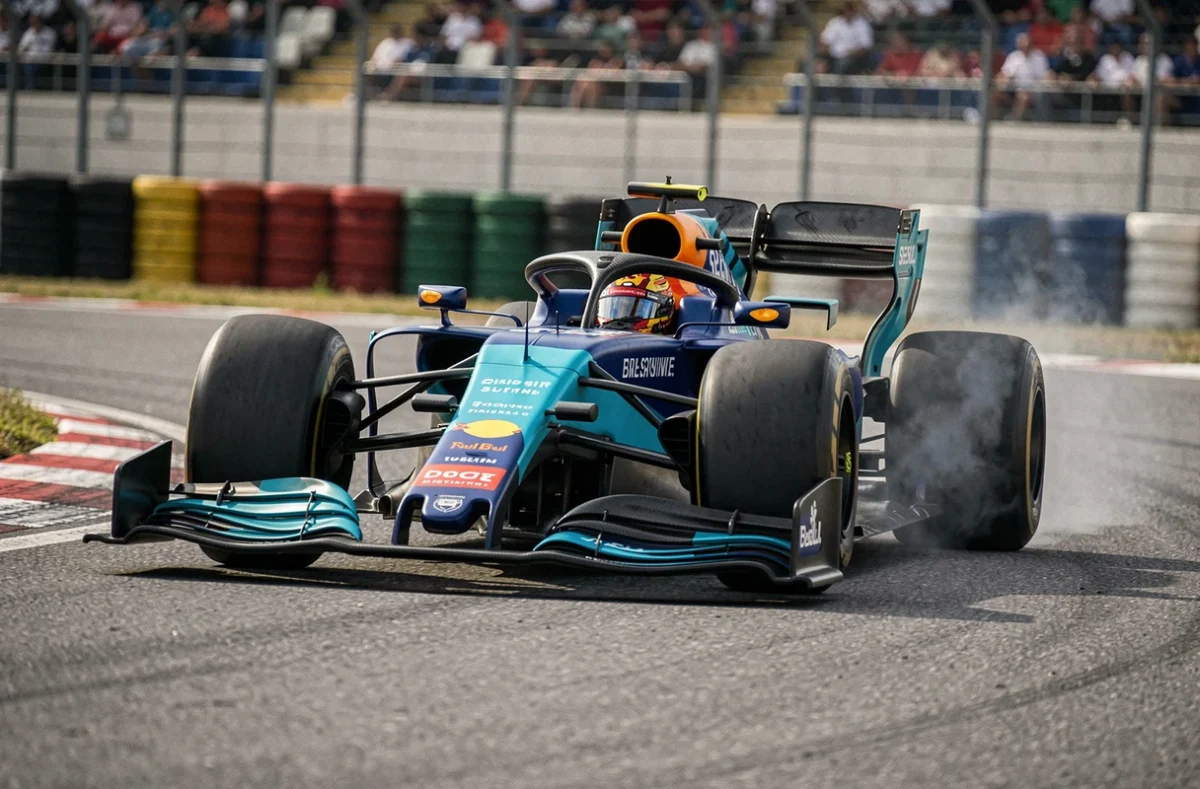
In Formula 1, lift and coast refers to a driving technique where the driver releases the throttle well before the usual braking point, then allows the car to decelerate naturally until entering the corner. This coasting phase reduces fuel consumption and brake wear, two limited resources over the distance of a Grand Prix.
Mechanics of lift and coast: what happens between the throttle and the brake
The principle relies on exploiting aerodynamic drag and rolling resistance. When a driver lifts off at the end of a straight, the car gradually loses speed without engaging the braking system.
The time loss per lap remains low compared to the savings achieved. On a circuit where braking zones are long, like Singapore, this technique allows enough fuel savings to lighten the car at the end of the race, or simply to finish the Grand Prix without running out of fuel.
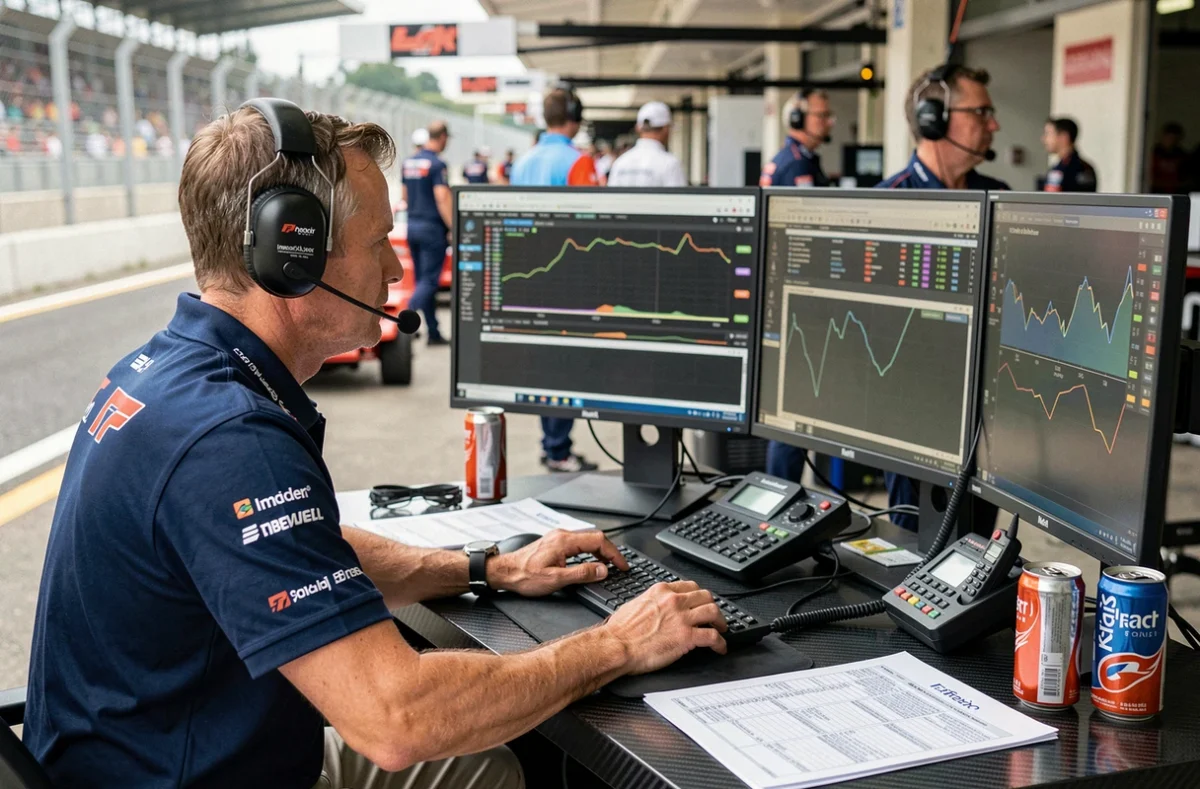
Understanding the lift and coast strategy in F1 involves distinguishing between two cases: one where the driver intentionally lifts off to manage their resources, and one where the race engineer imposes it via radio because consumption exceeds forecasts.
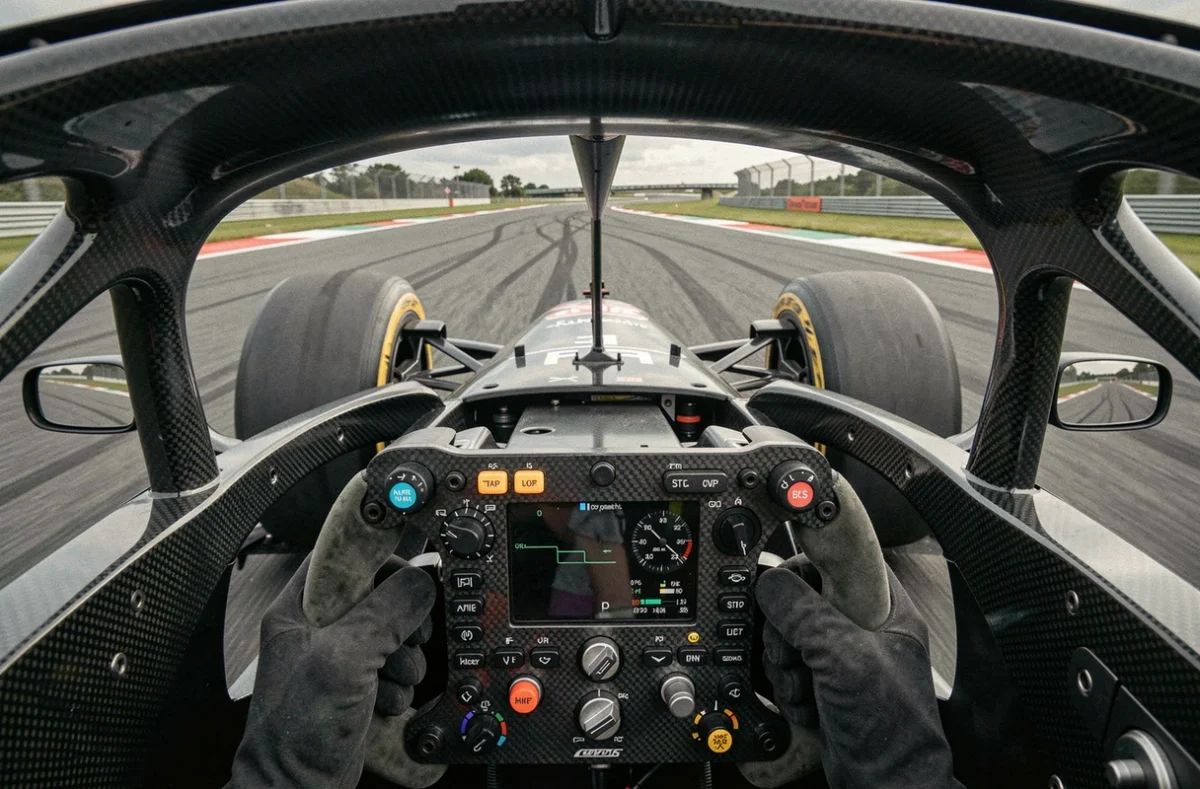
In the latter case, the driver receives audible beeps in their helmet or messages on their steering wheel indicating the intensity of the lift and coast to apply. The earlier the signal, the longer the natural deceleration phase, and the greater the lap time loss.
Fuel, brakes, and battery: the three resources managed during the race
Lift and coast is not only used to save fuel. The technique also plays a role in thermal management of the brakes. On circuits that are demanding on the braking system, reducing the entry speed into the braking zone decreases the kinetic energy that the discs must absorb.
- Fuel: each car starts with a fixed amount. If the actual consumption exceeds the planned model, the driver must lift off to complete the distance without falling below the minimum weight at the finish.
- Carbon brakes: prolonged overheating degrades their effectiveness. Lift and coast reduces the entry temperature into each braking zone, preserving their performance over the duration of the Grand Prix.
- Hybrid system battery: with electrical contribution close to half of the power of the power unit on the latest cars, drivers may need to lift off at the end of the straight to preserve available electrical energy, even when fuel and brakes are not an issue.
This third parameter transforms the classic compromise. It is no longer just about speed versus consumption, but about a trade-off between attacking a corner and available energy in the next straight.
Lift and coast and 2026 regulations: why the debate is intensifying
The regulatory evolution planned for 2026 amplifies the role of electric deployment. Fernando Alonso and Max Verstappen have publicly criticized the implications of this direction on driving. Their main argument: when the electric share becomes too significant, lift and coast no longer depends on driving style but on the car’s ability to recover and deliver energy.
The issue goes beyond pure performance. Sergio Pérez has raised a safety risk: cars with different electric deployment capabilities may enter a phase of strong energy deceleration while another continues to accelerate. Speed differences approaching corners increase, creating potentially dangerous situations.
The FIA has responded by proposing several adjustments. Among the reported changes are a reduction in the maximum recoverable energy in qualifying, an increase in instantaneous recovery power, and different power limits depending on circuit zones. The stated goal is to shorten “super clipping” phases and reduce the need to lift off over long stretches.
Impact on driving and race strategy in the Grand Prix
Strategically, lift and coast directly influences the choice of the amount of fuel loaded at the start. A team confident in its energy management can start with less fuel, which lightens the car and improves lap times at the beginning of the race.
Conversely, a team anticipating significant lift and coast may sometimes prefer to load more fuel to give the driver the freedom to attack during critical phases. The compromise varies depending on the circuit: in Singapore, where the average speed is low and there are many braking points, lift and coast weighs heavily. On a fast track with few slow corners, its impact decreases.
Race engineers adjust the instructions in real-time. A driver in a position to overtake may receive permission to consume more for a few laps, only to compensate later with a more pronounced lift and coast. This flexibility distinguishes the best teams: managing lift and coast is managing the overall pace of the race.
Lift and coast remains an invisible technique for the spectator but is crucial for the outcome. With the increase in the electric share in upcoming regulations, a team’s ability to minimize these deceleration phases could become a performance factor as discriminating as aerodynamic downforce or engine power.