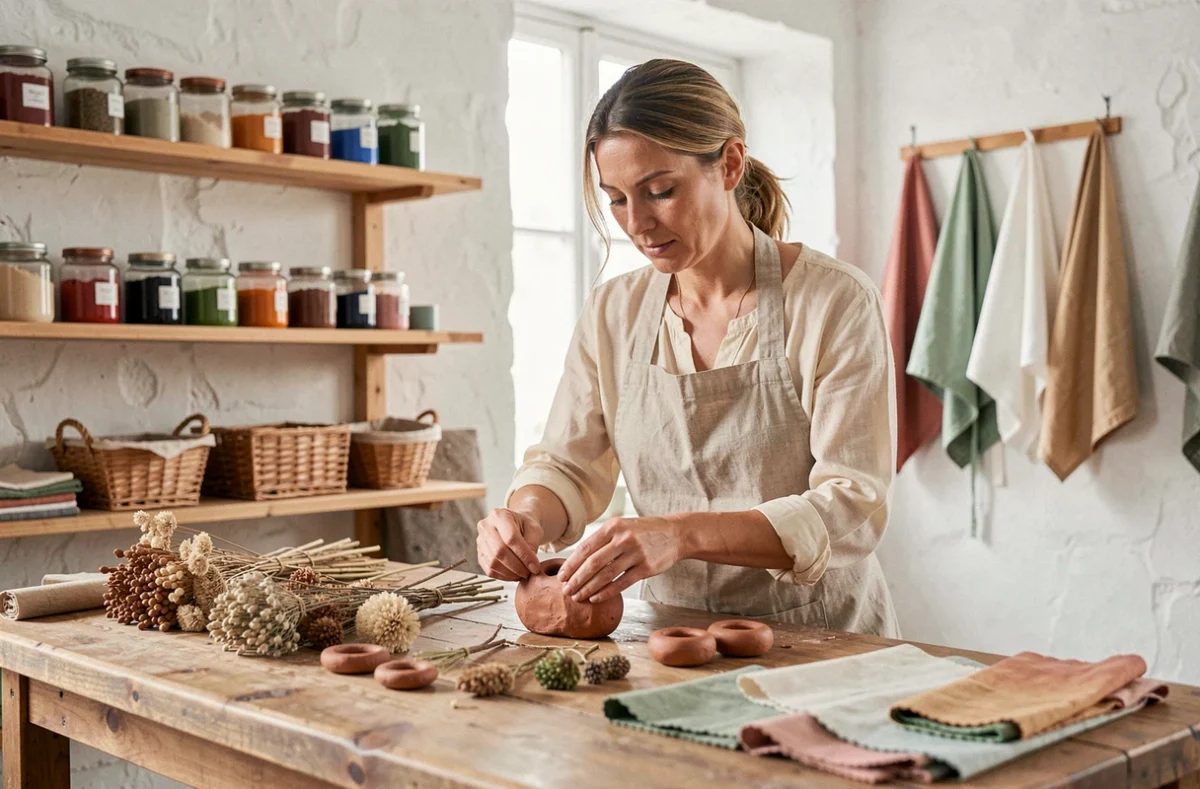
Anne Valérie is a creator whose work lies at the intersection of ceramics, textiles, and artisanal decoration. Her approach blends various manual skills to produce unique pieces, intended for both interior design and personal artistic expression.
Handmade Ceramics and Textile Creation: Two Disciplines That Respond to Each Other
Handmade ceramics and textile creation share a common foundation: working with raw materials, mastering repetitive gestures, and paying attention to detail that determines the final result. In the journey of a creator like Anne Valérie, these two disciplines do not operate in separate silos.
Ceramics impose a particular relationship with time. Between shaping, drying, and firing, each piece goes through several stages before reaching its final form. Textiles, on the other hand, offer a different immediacy: sewing, embroidery, or dyeing allow for a quick visualization of the effect produced.
What connects these practices at Anne Valérie is a quest for aesthetic coherence. The shades, textures, and patterns developed in ceramics are reflected in the choices of fabrics and textile finishes, creating a recognizable universe from one piece to another.
Craftsmanship and Decoration: How a Handmade Object Integrates into an Interior
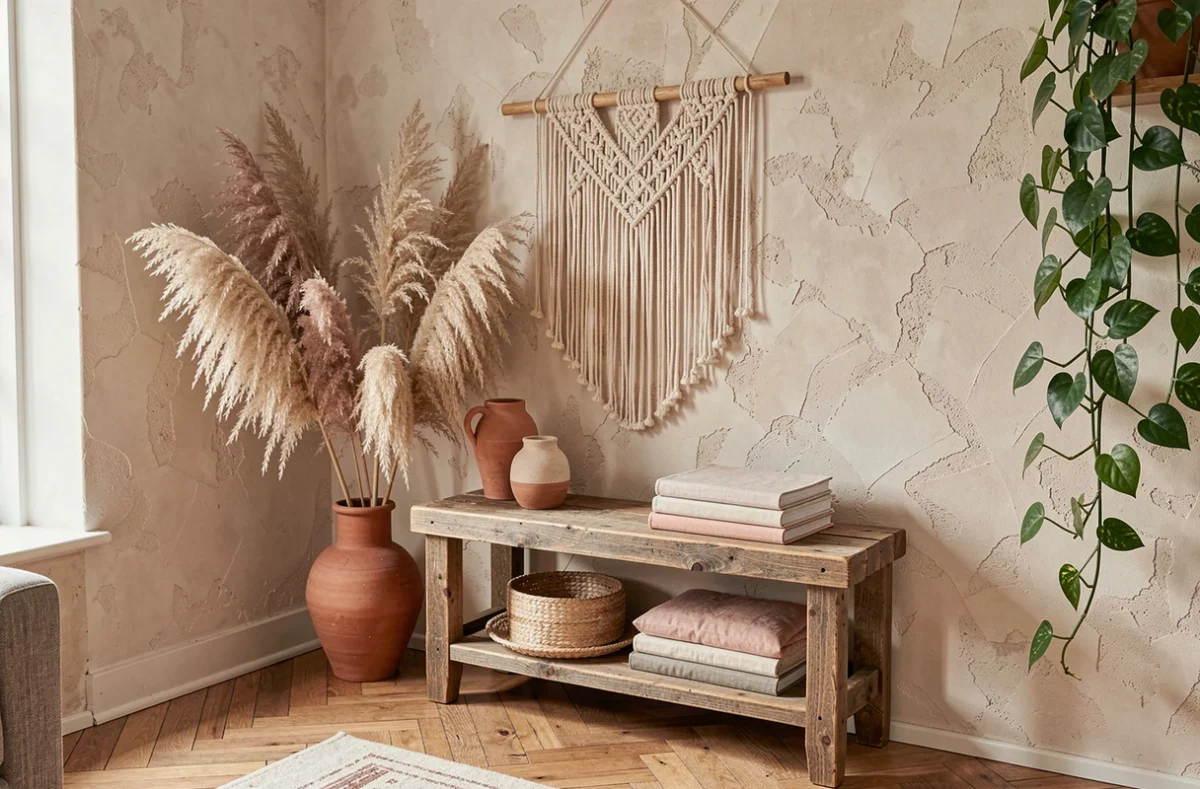
A handmade object does not decorate a space in the same way as an industrial product. The difference lies less in taste than in measurable physical characteristics: surface irregularities, color variations, tool marks.
In ceramics, each piece out of the kiln presents its own nuances. Two bowls from the same mold and glaze will have slightly different reflections depending on their position in the kiln. This uniqueness is precisely what enthusiasts of artisanal decoration seek.
Criteria for Integrating a Handmade Piece into an Interior
- The color palette of the piece should interact with the dominant colors of the living space, without necessarily replicating them exactly
- Proportions matter more than style: a vase that is too small on a large console visually disappears, regardless of its level of finish
- The mix of materials (matte ceramics, raw textiles, natural wood) creates a visual depth that uniform surfaces do not produce
- Lighting radically alters the perception of a glaze or textile dye; test the piece under natural light before fixing its location
These principles are not specific to any particular decorative style. They work equally well in a contemporary interior as in a more rustic setting.
Craft Creator Journey in France: What the Pottery Market Reveals
Pottery markets and craft fairs are the main distribution channels for many independent ceramicists in France. These events allow for direct contact between the creator and the buyer, without intermediaries.
The pottery market functions as a traveling showcase. A ceramicist like Anne Valérie, based in the south of France, can exhibit at regional events throughout the year. The calendar of these markets structures the production rhythm: the months leading up to the summer season concentrate intense workshop activity.
This sales mode also imposes technical constraints. The pieces must withstand transport, resist repeated handling by visitors, and remain accessible in terms of price. These requirements guide the choices in creation: wall thickness, type of glaze, size of objects.
Creative Workshops and Knowledge Transmission
Beyond sales, several artisans offer creative workshops open to adults and children. These sessions serve two distinct functions.
The first is educational: learning to throw a piece, understanding the behavior of clay, discovering the basics of glazing. The second is economic: workshops generate a regular supplementary income, less dependent on the seasonality of markets.
For participants, the workshop offers a tangible experience of craftsmanship. Touching the clay, observing the material’s resistance, accepting the unpredictability of the result: these steps permanently alter the perception of a handmade object.
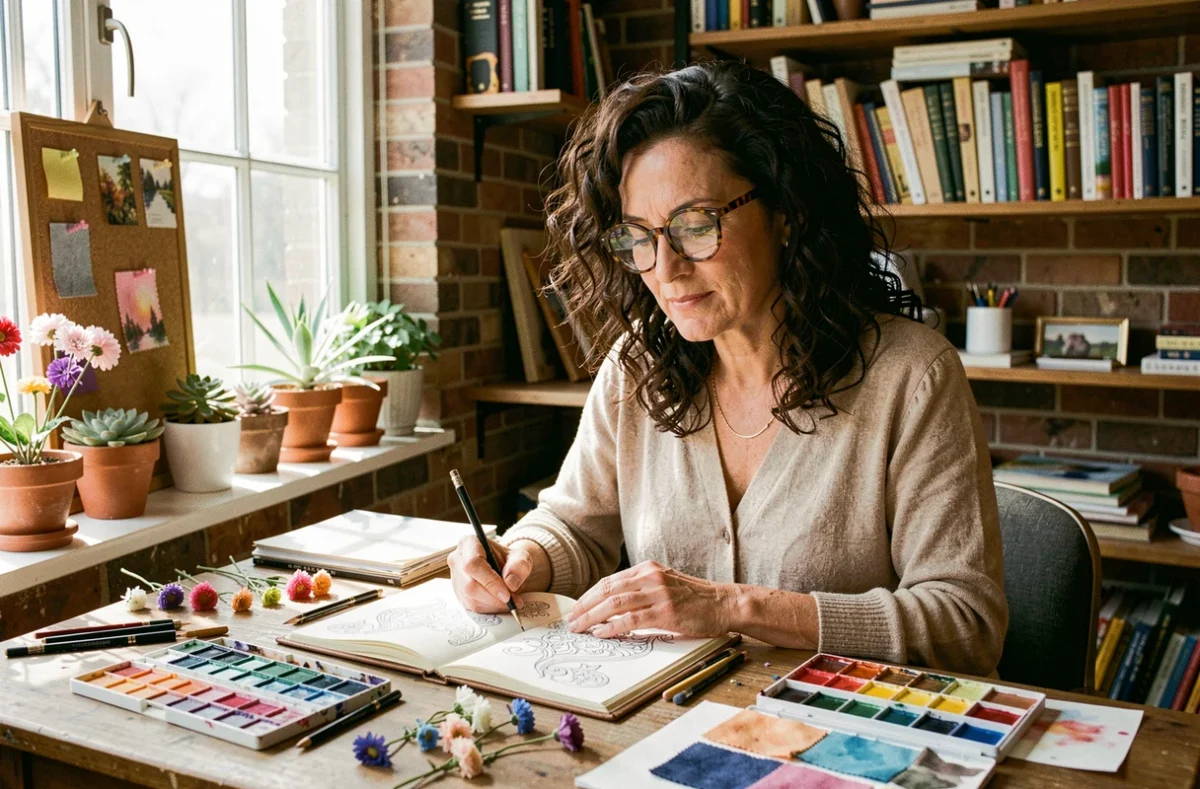
Inspiration and Creative Universe: What Distinguishes an Author’s Approach
The term “creative universe” refers to the set of aesthetic, technical, and thematic choices that make an artisan’s work identifiable. For a creator who practices both ceramics and textiles, this universe is built through accumulation and intersection.
The sources of inspiration are not anecdotal: they directly determine the forms produced. A Mediterranean landscape influences the color palette. A traditional plant dyeing technique guides the choice of fibers. Each technical decision stems from a framework of references that has been established over years of practice.
What distinguishes an author’s artisanal approach from standard decorative production is the coherence between these choices. The materials, colors, formats, and finishes respond to an internal logic, not to a market trend.
- The repetition of a motif or shape from one collection to another creates a visual signature
- The refusal of certain materials or industrial processes asserts a positioning
- Documenting the creation process (workshop photos, manufacturing steps) enhances the clarity of the approach for the public
Artisan craftsmanship in France relies on this ability of creators to develop their own language. Anne Valérie’s work illustrates this dynamic where ceramics, textiles, and decoration are not juxtaposed activities but facets of the same aesthetic quest, rooted in the daily practice of the workshop.