The income tax IR is the second budgetary source of the French State after the VAT. This direct tax, calculated at the household level, is collected by the State on salaries and the income of individuals making up the household. Through this article, we invite you to discover everything there is to know about this mandatory state levy known as income tax.
Taxable persons for income tax
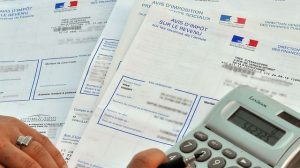 Not all taxpayers are subject to income tax. In 2014, for example, only a minority of 47.3% of taxpayers paid this tax. Indeed, income tax is paid according to predefined brackets. Thus, the majority of households do not have sufficient income to reach the first taxable bracket with a non-zero rate, and are therefore exempted.
In principle, the IR only concerns individuals, but since there are partnerships such as civil companies that do not have their own tax personality, the profits of these companies are taxable under the IR in the name of each partner, in proportion to their participation in the company.
Taxable persons for the IR are also determined based on their domiciliation. Thus, for French residents, taxable income in France includes all their income earned in France and abroad. For non-residents, only income earned in France is taxable.
The necessity of making declarations within the set deadlines
The Ministry of Economy is responsible for defining the deadlines for income tax declarations each year. Thus, anyone who does not adhere to these dates will be subject to a penalty. Considering all deadlines, to avoid having to pay such tax sanctions in the future, whether for paper filers or online filers, we advise you to secure the 2018 calendar that you will find on www.document-gratuit.fr. This way, you will never miss the deadlines for your taxes again.
Income tax and online declarations
Until now, not all taxpayers are required to declare their income online. Online payment becomes mandatory when the reference tax income (RFR) exceeds a given amount. Thus, for 2017, if your RFR for 2015 exceeds 28,000 euros, you are required to pay online. The same will apply in 2018 if your RFR for 2016 is above 15,000 euros. However, starting in 2019, regardless of the amount of their RFR, all taxpayers will have to pay online.
Payment of income tax
 Several methods exist for paying income tax. However, the main ones are monthly payments where the payment of the IR is spread over the entire year and payment by provisional installments. For the latter, the taxpayers concerned are those whose IR exceeds 347 euros in 2017 (but will be revised to 350 euros in 2018), those who have not chosen the monthly payment option, and those already taxed under the IR by way of role. Payment by provisional installments is made in three installments, the first payable by February 15 at the latest, the second by May 15, and the last by September 15.
In general, the payment methods used are: cash, bank check, interbank payment order, online payment, or automatic debit.