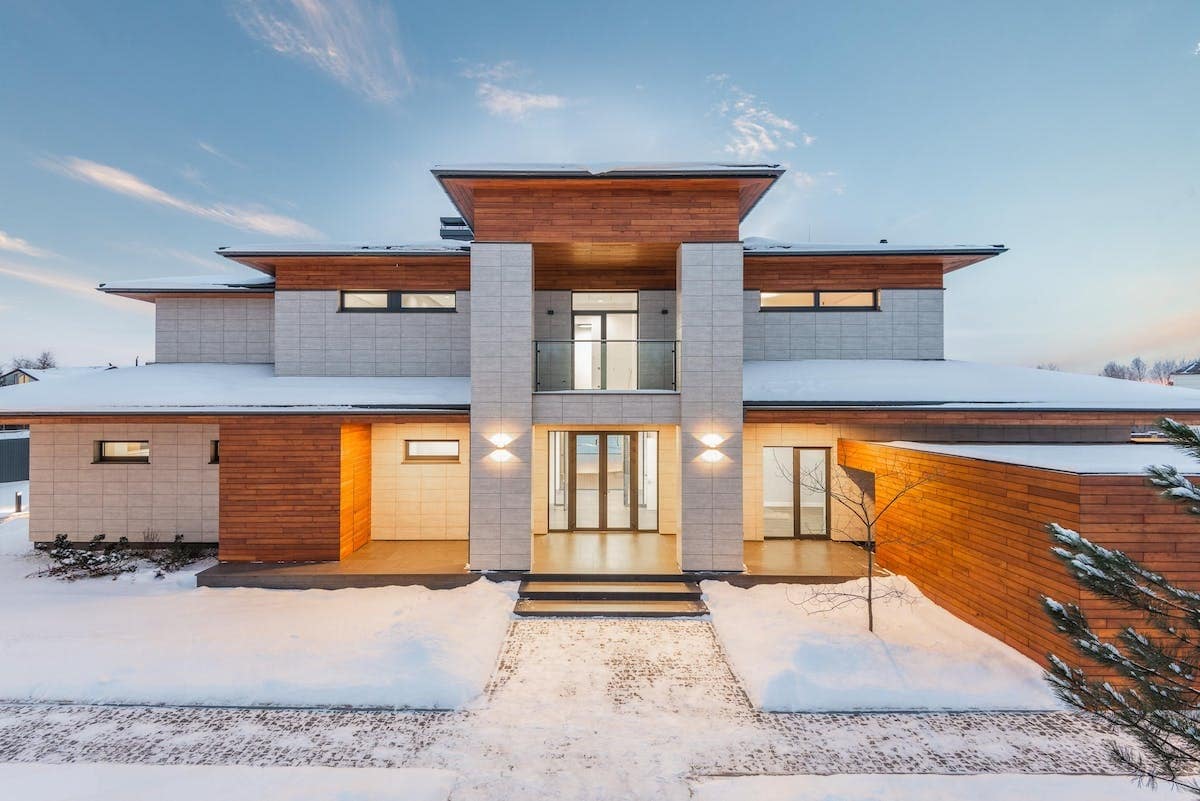
Let’s imagine for a moment that you are about to undertake facade renovation work. Perhaps you simply want to repaint the exterior of your home or are considering external insulation. Whatever your motivation, the first step is to determine the area of your facade. Why is this so important? Because it will allow you to estimate the amount of materials needed, the cost of the work, and also to understand the local regulations that may apply. So, how do you calculate the surface area of your house facade? Let’s dive into the world of mathematics applied to residential architecture.
Calculating the surface area of a facade: methods and accuracy
When we talk about ‘house wall area 100m2’, it is essential to clarify that this does not necessarily represent the total area of the exterior walls. This measurement often refers to the sum of the surfaces of all the exterior walls, without taking into account the openings such as gates and windows that can significantly reduce this value.
So how do we accurately calculate this ‘house wall area 100m2’? The traditional method involves manually measuring each section of the wall. This process requires an individual calculation for each section (height x width) and then their addition. However, if your home has multiple openings or a complex architecture with various recesses and turrets, this method could be tedious and even inaccurate.
In light of these potential challenges, another option exists: the use of a laser distance meter. This technological tool offers greater precision in taking measurements, particularly useful when dealing with complicated corners or curved walls.
Despite all this, when calculating your ‘house wall area 100m2’, it is crucial to exclude all non-built areas: gates, windows, etc., as they obviously do not form part of the net built surface.
So do not hesitate to take multiple readings for each to eliminate any gross errors due to slackness during the process.
Once your data is gathered and your calculations are made • do not forget the importance of verification, especially if you are considering renovation or remodeling work • you will obtain your ‘house wall area 100m2’.
This measurement is a valuable indicator for assessing the necessary quantities of raw materials (paint, plaster…) and thus planning your project’s budget more accurately.
The exact calculation of ‘house wall area 100m2’ is no small feat. Whether by the traditional method or using more advanced technological tools, this task requires rigor and precision to best estimate your material needs and to comply with certain local regulations that may impose limitations on certain extensions or modifications.
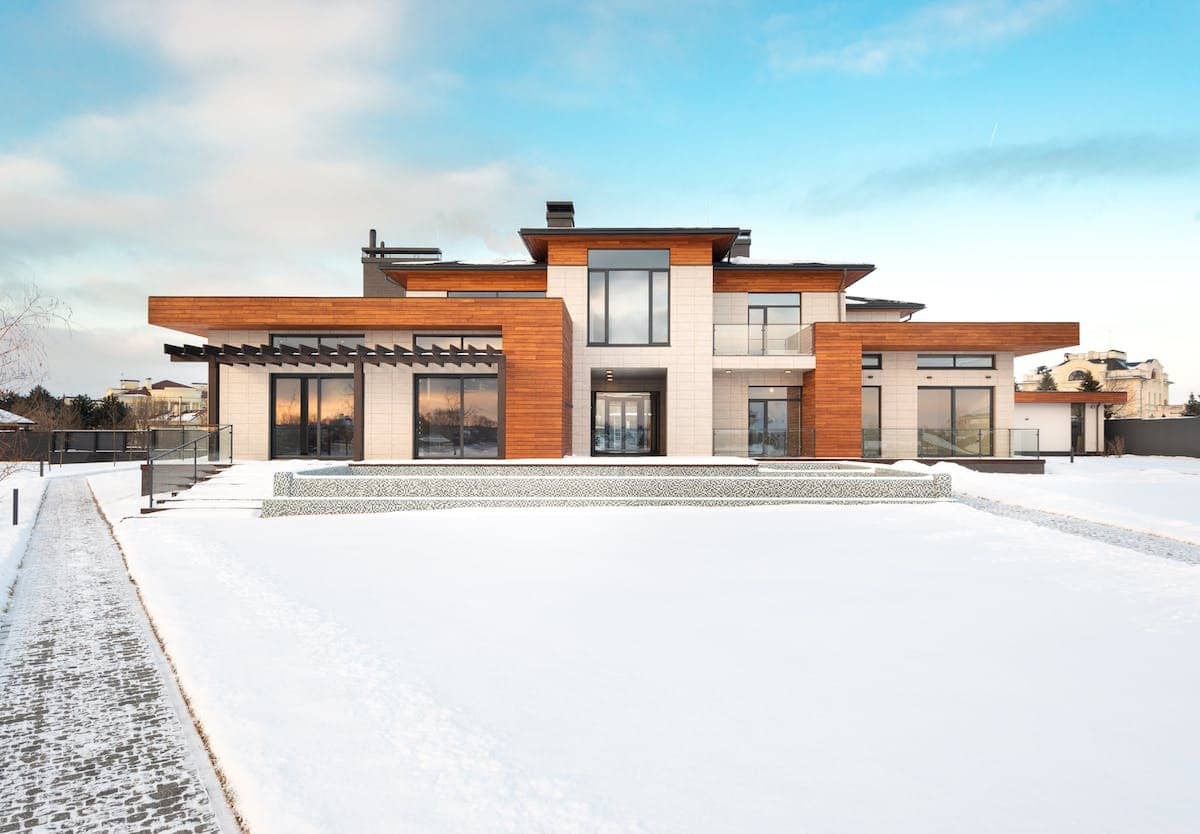
Essential tools for measuring a house facade
When it comes to calculating the surface area of a house facade, you need to have the appropriate tools to perform this task accurately. While the traditional method requiring manual measurements can be effective, using more advanced tools can simplify and speed up the process.
Among the commonly used tools for calculating the surface area of a facade, the tape measure is essential. This flexible measuring instrument allows you to easily take linear dimensions of the different sections of the wall. It is recommended to use a stainless steel tape measure to ensure its durability and resistance to wear.
Another useful tool is the spirit level. Not only does it help you check if your tape measure is perfectly aligned during measurements, but it also ensures that your readings are taken horizontally or vertically as needed.
For those looking for a more modern and precise option, a 3D laser scanner can be used to quickly and accurately obtain all the necessary data for calculating wall surface area. This type of device emits laser beams that scan the entire surface of the wall, creating a detailed 3D representation that can be converted into individual surfaces using specialized software.
We should not forget the increasing use of drones equipped with high-resolution cameras in this field. By flying over the facade from different perspectives, these devices can capture detailed images that can then be used to take precise measurements using photogrammetry software.
You should note that, regardless of the method chosen, it is advisable to take multiple measurements to obtain a reliable average and minimize potential errors. You should regularly check your instruments to ensure they are correctly calibrated and provide accurate results.
The choice of tools needed to calculate the surface area of a facade will depend on the desired level of accuracy as well as the specific constraints related to your project. Whether you opt for a traditional tape measure or use more modern devices such as a 3D laser scanner or a drone equipped with a camera, always ensure you use reliable and appropriate tools to obtain an accurate measurement. This will not only help you in planning and budgeting your work but also in complying with current local regulations.
Collecting essential information for accurate measurement
To obtain an accurate measurement of a facade’s surface area, you need to collect certain key information. You should gather the architectural plans and diagrams of your house. These documents provide valuable indications about the different surfaces and the geometric formulas to consider during the calculation.
Note all the specific features of the facade such as windows, gates, or balconies. Be sure to measure these elements individually as well as their proportions relative to the total surface area of the wall.
The nature of the materials used to cover the facade also impacts the precise calculation of its surface area. Therefore, you will need to gather information about the average thickness of the material to include it in your calculations.
If your house has reliefs such as decorative ornaments or moldings, it is recommended to measure their volume and position accurately to obtain an even more precise measurement.
Consider all external factors that may affect the actual surface area of the wall. This includes, for example, a coating that may be applied later or any other structural modifications planned.
Do not forget that it may be useful to take multiple readings at different times of the day to account for potential variations due to shadows cast by the sun or artificial lighting.
To obtain an accurate measurement of a facade’s surface area, you must collect all relevant information. From architectural plans and diagrams to the specific characteristics of the elements that make up the wall, every detail must be meticulously considered. By carefully gathering this information and using the appropriate tools to take measurements, you will be able to obtain an accurate estimate that will serve as a reliable reference in your architectural or renovation project.
Key steps to successfully calculate the surface area of a facade
Once you have gathered all the necessary information, it is time to move on to the actual calculation step. Here are the steps to follow to perform the calculation of a facade’s surface area:
Start by identifying each element present on the facade and measure it individually. Take into account windows, gates, balconies, and all other elements that contribute to the composition of the wall.
Then calculate the area of each of these elements using the appropriate geometric formulas. For example, for a rectangular window, multiply its height by its width to obtain its area.
Add all these individual areas together to obtain the total area of the elements present on the facade.
Now measure the area of the wall itself, excluding all the elements already accounted for in the previous step. Use a tape measure or any other relevant measuring tool for this task.
If your facade has reliefs or decorative ornaments, also calculate their area separately and add it to the total obtained previously.
Take into account the average thickness of the material used to cover the wall to obtain a more accurate estimate of its actual surface area.
By following these steps with rigor and precision, you will be able to obtain a reliable and accurate measurement of a house facade’s surface area.
This will be particularly useful when it comes to estimating the cost of renovation work or performing calculations for the purchase of materials.
Errors to avoid when calculating the surface area of a facade
When it comes to calculating the surface area of a facade, be sure to exercise caution to avoid certain common errors. Indeed, an incorrect estimate could have disastrous consequences for your project.
The first error to avoid is failing to account for protruding elements such as cornices or cantilevered balconies. These elements can significantly increase the actual surface area of the facade and thus influence the cost of the work.
Another common mistake is related to the thickness of the wall covering. Keep in mind that this thickness must be included in the calculation to obtain an accurate measurement. Neglecting this aspect can lead to a significant underestimation of the actual surface area.
Be sure to take precise measurements and avoid a lack of accuracy in these measurements, as this can skew the overall calculation. Take the necessary time to perform accurate measurements and use an appropriate tool to ensure their reliability.
Keep in mind that there may be variations between different parts of the same facade, especially if it has multiple stories or if its architecture has complex features. In this case, be sure to adapt the calculation according to the specificities encountered.
Correctly calculating the surface area of a facade requires rigor and attention to detail. By avoiding these common errors, you will be able to provide an accurate and reliable estimate for your renovation projects or material purchases.
Practical applications of measuring a facade’s surface area
Once you have obtained the precise measurement of a facade’s surface area, this information can be used in various practical and useful ways. It allows you to accurately determine the exact amount of materials needed to cover or renovate this facade.
By knowing the total area to be treated, you can estimate the number of liters of paint or the number of rolls of covering needed. This avoids unpleasant surprises in terms of supply and facilitates the establishment of the budget for the work.
The precise measurement of a facade’s surface area can also be useful in the context of a real estate project such as a sale or rental. Indeed, it allows future buyers or tenants to have a clear and objective idea of the exterior dimensions of the property.
Some regulations impose limitations in terms of footprint or when it comes to specific outdoor arrangements such as a terrace, for example. In this case, it is necessary to measure the concerned surface area accurately to comply with these strictly regulated rules.
If you are considering a complete or partial renovation of your existing facade, knowing its exact surface area will be essential for comparing quotes from different professionals. You will thus have an objective criterion that will facilitate your final choice.
In certain specific cases where every square centimeter counts (for example, in bold architectural projects or constructions in dense urban areas), the precise measurement of a facade’s surface area can be crucial for optimizing the use of space.
The precise calculation of a facade’s surface area is an essential element in various contexts. Whether for logistical, financial, or regulatory reasons, this information allows for more effective planning and facilitates informed decision-making.