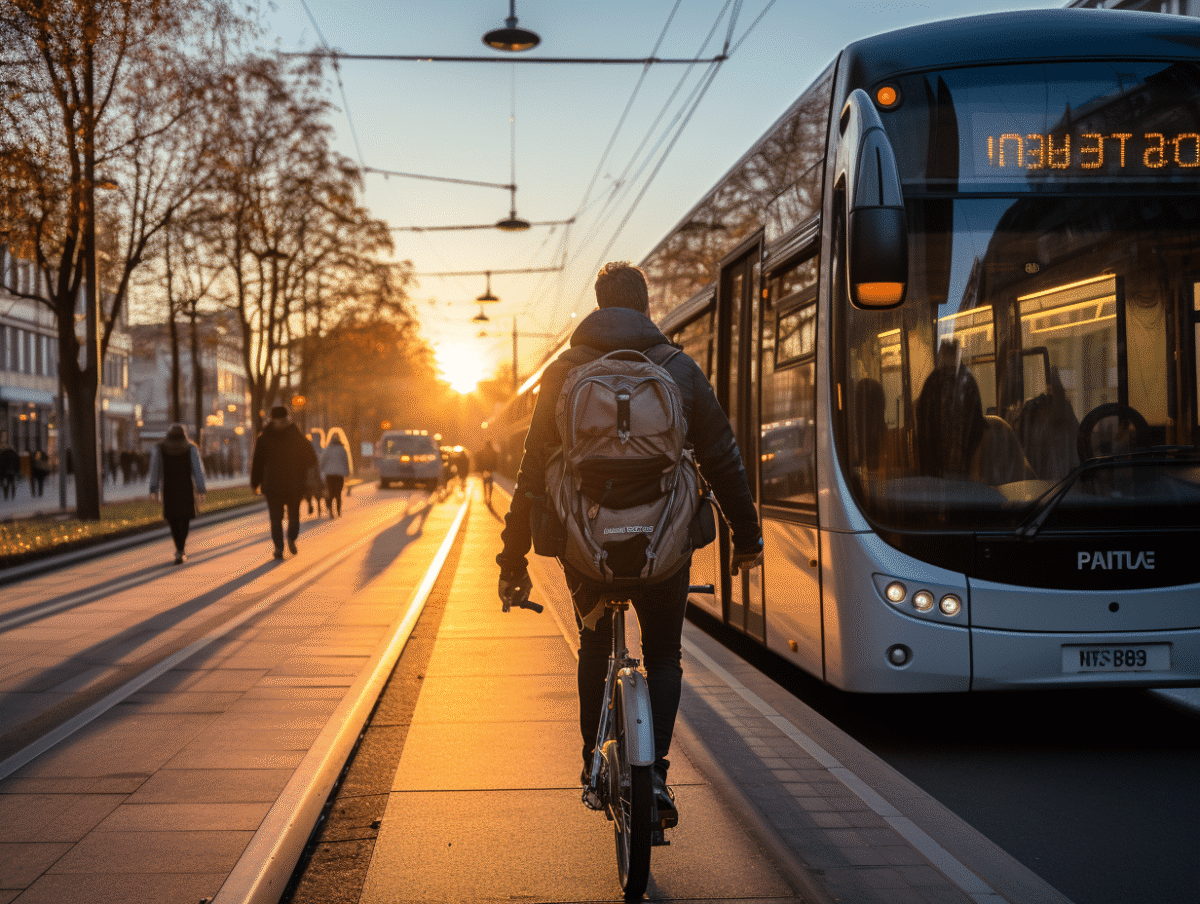
In modern cities, optimizing travel has become a daily quest for many. Faced with the increasing density of traffic and the need to reduce carbon footprints, navigation apps have had to adapt. They now offer sophisticated features that go well beyond simple route calculation. These smart tools take into account real-time traffic, multimodal transport options, personal preferences, and even environmental data to propose optimized routes. These innovations are crucial for navigating effectively through the complex urban ecosystem, where every minute and every route choice has an impact.
The Latest Innovations in Urban Navigation
Navigating the complexity of cities requires tools that meet today’s challenges. Mobile apps are constantly evolving to provide users with increasingly precise and interactive services. Among them, Google Maps remains a reference in urban navigation. It offers ever more refined route planning and integrates traffic alerts to avoid congestion, thus facilitating daily travel.
Citymapper, on the other hand, stands out with its sophisticated multimodal approach. It integrates services like Uber, thus offering users a wider range of options for their journeys. The ability to easily switch between different modes of transport, from walking to private cars to public transport, allows Citymapper to establish itself as a comprehensive solution for urban mobility.
The uniqueness of Waze lies in its collaborative incident reporting system. Users contribute to updating real-time traffic conditions by sharing accidents, roadblocks, and other disruptions. Waze transforms into a community network where every driver becomes a sentinel of road information. There are even rumors that a ‘Waze pedestrian’ version might emerge, extending the logic of information sharing to those who traverse the city on foot.
Public transport services are also keeping pace, integrating new technologies to enhance the user experience. RATP and SNCF, for example, strive to provide real-time schedules and enable more efficient route searches and trip planning. These features transform the way travelers interact with transport services, contributing to a better quality of life and smoother urban mobility.
How New Technologies Enhance the Urban Travel Experience
The development of digital technologies has transformed the urban travel experience. From simple route calculations to more sophisticated services, major players like RATP and SNCF are working to optimize the journeys of city dwellers. The availability of real-time schedules by RATP simplifies users’ lives, allowing them to anticipate and adjust their travel based on real-time traffic fluctuations.
SNCF, for its part, does not merely relay updated information. It offers trip planning that considers not only schedules but also disruptions, construction work, and other factors that may influence travelers’ routes. This integration of real-time information is fundamental to ensuring a smooth and stress-free user experience.
Mobility services are also enriched with multicriteria route search options, incorporating preferences such as speed, comfort, or ecological footprint. Navigation apps thus provide a personalized experience that meets the specific needs of each user. The quality of life in the city is improved, making travel less chaotic and more predictable.
The interaction between various mobility services and navigation apps contributes to a more integrated urban mobility. Users benefit from an overview of available options, whether for a one-time trip or as part of a daily routine. This synergy between different modes of transport is a cornerstone towards a more connected city that is more responsive to the needs of its residents.