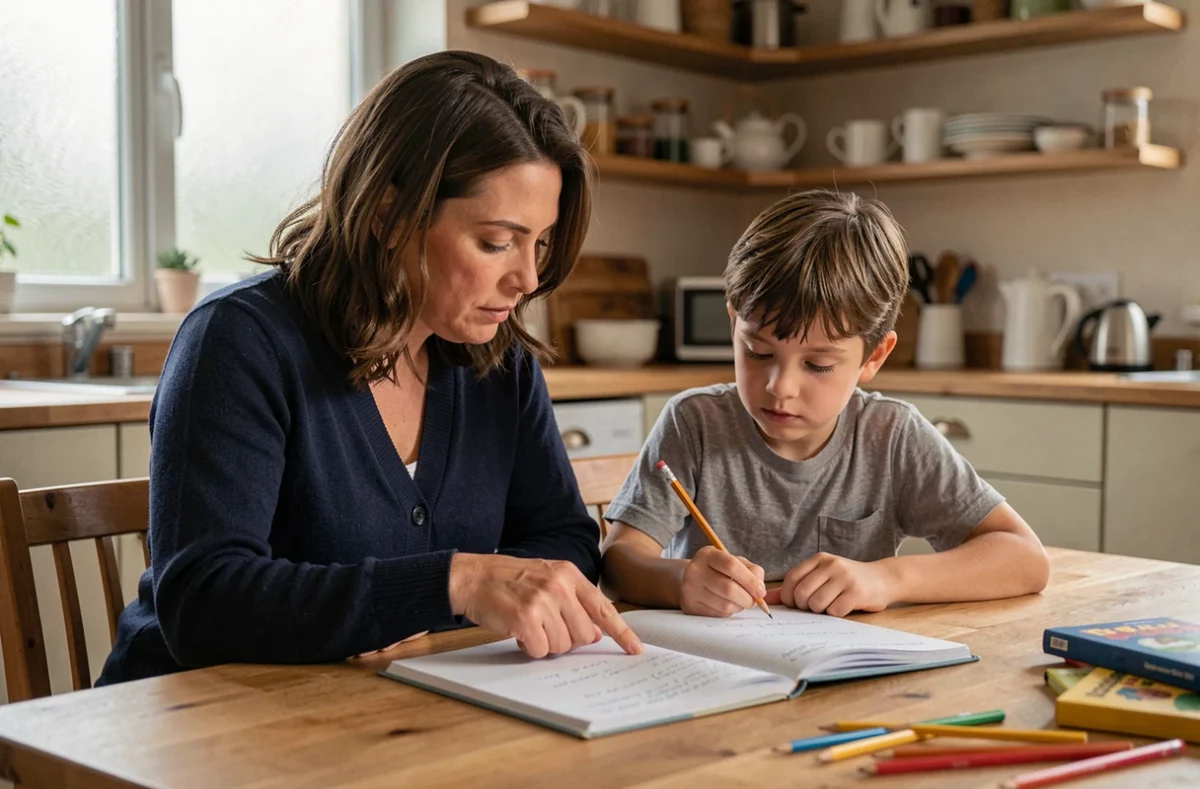
Not all parents approach school with the same resources. Some are fluent in the language of instruction, understand how report cards work and can read between the lines of teachers’ expectations. Others cannot. A child’s educational support cannot be measured by the number of homework assignments parents supervise. It depends on the kind of communication between families and schools, the support provided at home, and the education system’s ability to avoid making learning dependent on resources that are unevenly distributed.
School-parent communication: what PISA data reveals about the quality of interactions
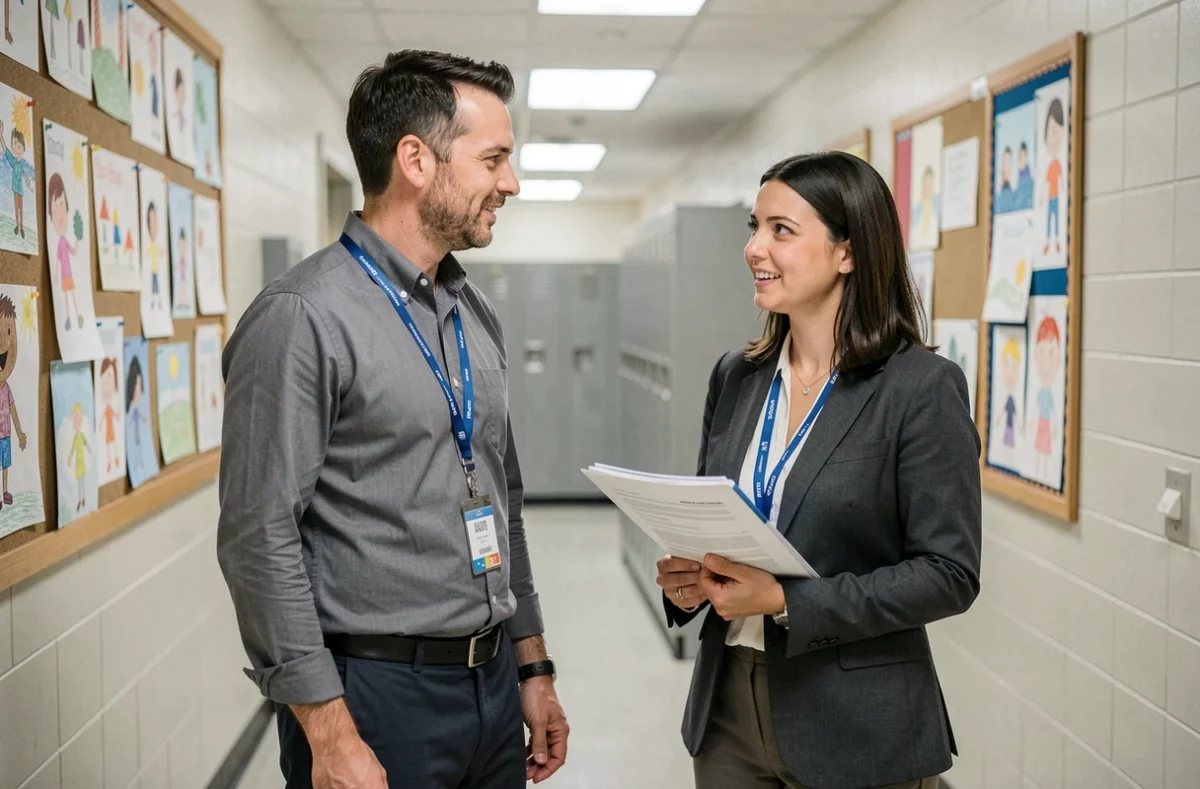
In its PISA 2018 report (Volume III), the OECD distinguishes between two types of contact between parents and schools. Regular discussions focused on students’ learning and progress are associated with better academic outcomes. By contrast, contact limited to problems undermines trust between families and the school.
This distinction changes how we typically view parental involvement. Telling parents to “get more involved” is not enough if the only opportunities for dialogue are meetings about behavior or termly report cards.
| Type of school-parent contact | Observed effect (PISA 2018) |
|---|---|
| Regular discussions about learning and progress | Positive association with academic outcomes |
| Contact prompted only by a problem | Undermines trust between families and schools |
Several institutional initiatives aim to provide clear guidance on learning objectives without assuming that every family has the same educational background.
Additional resources are available on the Échos D’École website, which offers parents age-appropriate content to help them follow their children’s education at every level.
Homework: its effectiveness varies by age and socioeconomic background
Homework does not have the same effects at every grade level. According to the Education Endowment Foundation’s evidence review (updated in 2021), the link between homework and academic outcomes is stronger in secondary school than in primary school. Time spent on exercises alone does not guarantee progress: the quality of the instructions and the subject matter have a greater impact.
In its Global Education Monitoring Report 2021/2, UNESCO highlights an issue rarely addressed in parenting guides: homework can widen gaps between students. Families do not all have the same amount of time, access to the same material resources or the same familiarity with the content being taught.
Making learning dependent on parental support that varies by socioeconomic background turns an initial inequality into an inequality in outcomes. UNESCO’s recommendations emphasize that schools should not delegate to families what they are responsible for providing themselves.
Supporting without correcting: fostering independence rather than parental control
Research on academic motivation distinguishes between two parental approaches to homework:
- Supporting autonomy means listening to the child’s point of view, encouraging them to work things out for themselves and accepting mistakes as part of the learning process.
- Parental control (systematically checking work, correcting answers and putting pressure on grades) is perceived as a constraint and can reduce students’ intrinsic motivation.
- Parents who ask open-ended questions (“How did you work that out?”) rather than closed questions (“Are you sure that’s the right answer?”) encourage lasting learning without taking the teacher’s place.
Helping children become independent matters more than checking their work. This distinction is especially useful for parents who are unfamiliar with school subjects: their role is not to be a second teacher.
Supporting a child’s education when a parent does not speak the language of the school
Parents who speak another language or are unfamiliar with French school conventions often find themselves in a paradoxical position. The school expects them to keep track of homework, sign the communication book and attend meetings, while assuming they understand educational terminology and unspoken expectations.
Institutional resources seek to provide clear, grade-by-grade guidance on what children should know. However, because these resources are written in standard French, they do not overcome the language barrier for families who do not speak French.
What families contribute beyond the school setting
Research on school readiness identifies skills that are not academic: emotional regulation, the ability to cooperate, curiosity and a habit of telling stories. These social and emotional skills develop within the family, whatever language is spoken at home.
- Telling stories in a child’s home language strengthens their storytelling skills, which can later transfer to French.
- Maintaining consistent routines (bedtimes and quiet time for homework) creates an environment conducive to learning without requiring parents to have academic expertise.
- Praising effort rather than results builds perseverance, a well-documented protective factor in research on academic achievement.
Families do not need to become an extension of the school. The most lasting form of parental support is built on structure, listening and stability, not mastery of the curriculum.
Institutional initiatives (ministry handouts, parent centers in schools and intercultural mediation) are more effective when they reach out to families without assuming they are already familiar with the system. For both schools and parents, the challenge remains to maintain a dialogue focused on the child’s progress rather than solely on their difficulties.