
Installing solar panels on a roof, signing up for a green electricity contract, joining a community energy project: the options for using renewable electricity have multiplied in France in recent years. The choice depends less on the technology than on timing.
Solar generation peaks in the middle of the day, while household electricity use rises in the morning and evening. Understanding this mismatch is the first step to making a successful energy transition without wasting electricity or paying too much.
The mismatch between solar generation and consumption: the real problem to solve
Have you ever noticed that your electricity meter runs fastest when you get home in the evening? Heating, the oven, lighting, charging devices: everything adds up between 6 p.m. and 9 p.m. Solar panels, meanwhile, generate the most electricity between 11 a.m. and 2 p.m.
This mismatch creates an imbalance. Without storage or a way to shift consumption, a large share of the solar electricity generated is not used on site. It is fed back into the grid, sometimes at a buyback rate well below the price paid for electricity. Market price analysis even shows a “cannibalization” effect: when many solar installations generate electricity at the same time, prices can fall or even turn negative during those hours.
When assessing a project, you therefore need to consider not only the amount of electricity generated each year, but also the share actually consumed on site and the terms for selling any surplus. Regional suppliers can help you think this through, as you can see at https://www.breizhpower.fr, which offers renewable energy plans tailored to local consumption patterns.
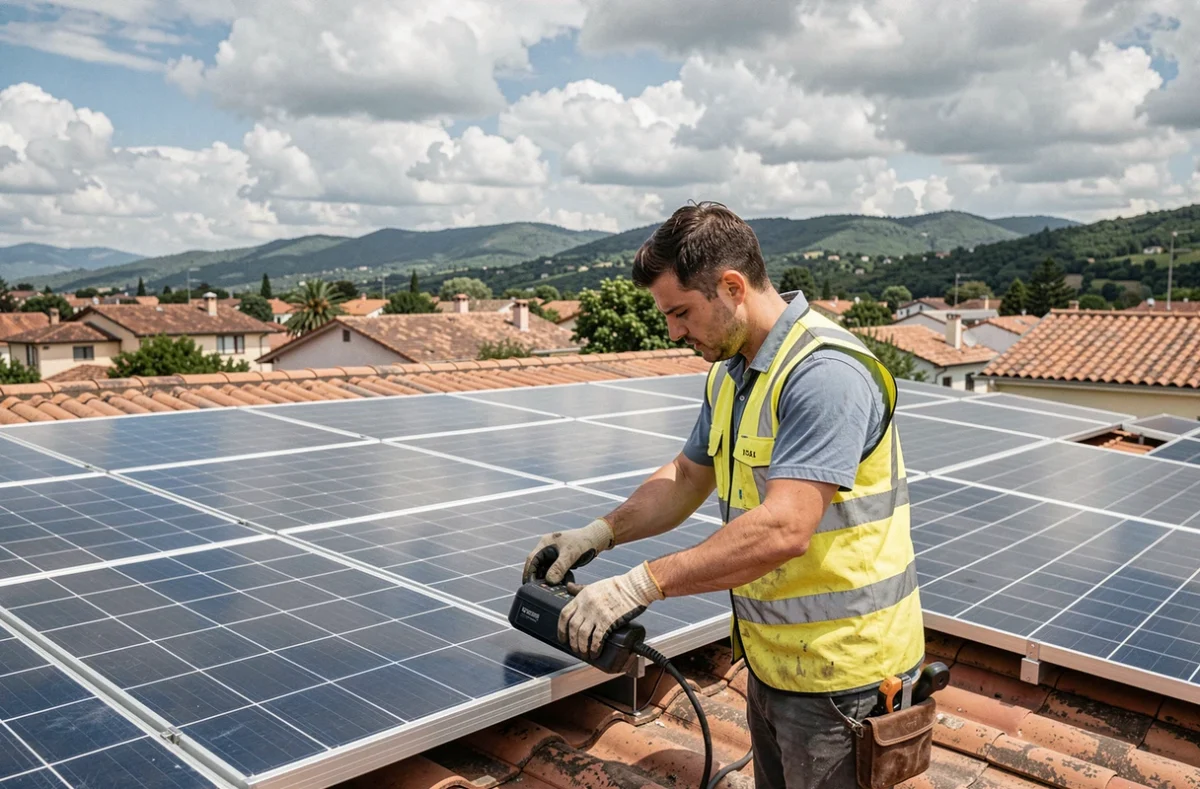
Individual panels, a battery or collective self-consumption: comparing three options
There are three main strategies for addressing this timing mismatch. Each suits a different household profile.
Solar panels for individual self-consumption
This is the most common option. Rooftop panels supply electricity directly to the home. Any surplus is sold to the grid under a purchase obligation contract.
The advantage: it is easy to set up. The drawback: without a battery, a significant share of the electricity generated is sold back, often at a modest rate. This option works well for households that use some of their electricity during the day (working from home, retirement, or a water heater scheduled to run during sunny hours).
Adding a home battery
A battery stores surplus electricity generated at midday for use in the evening. It significantly increases the self-consumption rate. The trade-off is its high cost.
Before investing, ask yourself: how much solar electricity are you currently losing through free or poorly compensated exports to the grid? If the amount is small, a battery may not make financial sense.
Collective self-consumption among neighbors
This is a third option, less well known but growing rapidly. Several households, a condominium or a neighborhood share electricity generated by one or more local installations. In Les Sables-d’Olonne, a project of this kind was expanded across the municipality after exemptions were granted to extend its scope. This model makes it possible to pool generation and consumption across a local area, allocating energy according to each participant’s needs.
The rules are changing quickly. In 2026, Enedis clarified the procedures for transmitting dynamic allocation keys, and a maximization rule is due to apply to projects from July 1, 2027. It is best to check the rules in force when planning your project rather than relying on an outdated guide.
Setting up a collective self-consumption project: practical steps
Collective self-consumption involves more than just installing panels. It requires a structured organization. Here is what you need to plan for:
- Set up a legal entity to organize the project (an association, cooperative or SAS) to lead the project and coordinate participants.
- Identify the metering points for each producer and consumer, then sign an agreement with the grid operator (usually Enedis).
- Define the allocation keys—that is, the rules determining what share of generation goes to each participant at each time interval.
- Plan for supplementary electricity supply: when local generation does not cover consumption (at night, on overcast days or in winter), each participant remains connected to the grid and needs a standard electricity supply contract.
This collective arrangement takes time, but it offers a major advantage: it allows households that cannot install panels (renters or condominium owners without a suitable roof) to use locally generated renewable energy.

Manage your consumption to get the most from renewable electricity
Whatever option you choose, one opportunity remains underused: shifting some electricity use to hours when generation is abundant. Scheduling your water heater, washing machine or electric vehicle charging between 11 a.m. and 3 p.m. can radically change the economics of a solar installation.
Energy management systems, smart plugs and programmable thermostats can automate this shift. The investment is modest compared with a battery, and the impact on the self-consumption rate can be measured within the first few weeks.
The transition to greener energy is not determined solely by your choice of supplier or the installation of solar panels. The match between when electricity is generated and when it is used is what determines whether a project succeeds.
A household that generates a lot of electricity but uses it at the wrong times has not truly optimized its energy transition. Adjusting your habits, choosing the right setup (individual, battery or collective) and keeping up with regulatory changes: these three actions together make the difference between a symbolic gesture and a genuinely effective approach.