
Outdoor spaces often reveal their true potential through unexpected choices, far from standardized solutions. Some local regulations allow, under certain conditions, the installation of temporary structures that radically transform the layout of the land, while others formally prohibit them.
The combination of uncommon plants with recycled materials disrupts the established codes of landscaping. Size constraints no longer limit options, thanks to proven techniques that optimize every available nook.
What makes a garden truly unique?
A garden is the intimate trace of a passage, the signature of a place shaped in the image of its owner. Here, there’s no question of copying the neighbor or following the latest trend. Uniqueness arises from the meeting of carefully chosen decorative elements, the diversity of textures, and the staging of volumes. A well-designed garden layout allows for boldness, marrying the raw and the refined, new ideas and discoveries from the past. Imagine a cream gravel path winding between clusters of local species, punctuated by forged metal artworks: surprise greets you at every step.
Shaping a space that looks like no other begins with attentive listening to the land. Observe how the light changes, where the wind rushes in, and what slopes rhythm the topography. Then compose with these elements, not seeking to tame them, but to take advantage of them. Play with the diversity of foliage, mix heights, dare unexpected contrasts: the garden then becomes a field of expression, alive and changing.
To give character to your land, prioritize decorative elements that tell a story. A vintage bench, an old mirror hanging against a fence, mismatched terracotta pots, or robust materials that withstand the seasons: all these details add depth and personality. The advice gleaned from perspectives-jardin.fr, drawn from concrete projects, enriches these choices and encourages viewing the garden as a sensitive experimental ground.
Here are some ideas to add dimension to your layout:
- Combine local plants with rare species to enhance the unique character of your garden.
- Structure the space with noble or recycled materials, for an environmentally friendly approach.
- Invest in subtle lighting that reveals the garden’s relief as night falls.
What distinguishes a garden is not accumulation, but coherence and care given to every detail. Knowing how to design a garden means seeking meaning, rejecting easy solutions, and cherishing the beauty of what endures.
Inspiration: original ideas to transform your outdoor space
The layout of your space is not limited to a few well-aligned flower beds. To give a new dimension to your garden, sometimes you need to step off the beaten path. Installing a fountain pond, for example, offers your exterior a visual and auditory anchor, a source of freshness that marks the seasons. Placing bird feeders attracts life, enlivens the trees, and enhances biodiversity while creating daily spectacle.
On the terrace, the contrast of materials makes all the difference. A comfortable garden lounge, bright cushions, a weathered wooden table, a few hanging lanterns, a string of lights: every element counts. The lighting extends the evenings, sculpts shadows, and reveals the beauty of foliage at dusk.
To create a true atmosphere, it is wise to select strong objects capable of transforming the perception of the place. A sun lounger or a rattan deck chair, a stone sculpture, a graphic outdoor rug: the garden changes its face, becoming intimate or theatrical depending on the mood of the moment.
Here are some concrete ideas to shape the space in your image:
- Vary the heights to create dynamic perspectives.
- Create a corner reserved for animals, with a discreet shelter integrated into the vegetation.
- Choose natural and sturdy materials that are accessible even on a small budget: some accessories cost less than a few dozen euros.
Often, a simple combination of colors or a detail from elsewhere is enough to inspire new ideas for designing your garden. Every intervention, even modest, leaves its mark and makes the outdoors a space that is both a refuge, a field of experiments, and a living decor, for those who know how to look at it and shape it.
Small gardens, big tips: practical advice to optimize every square meter
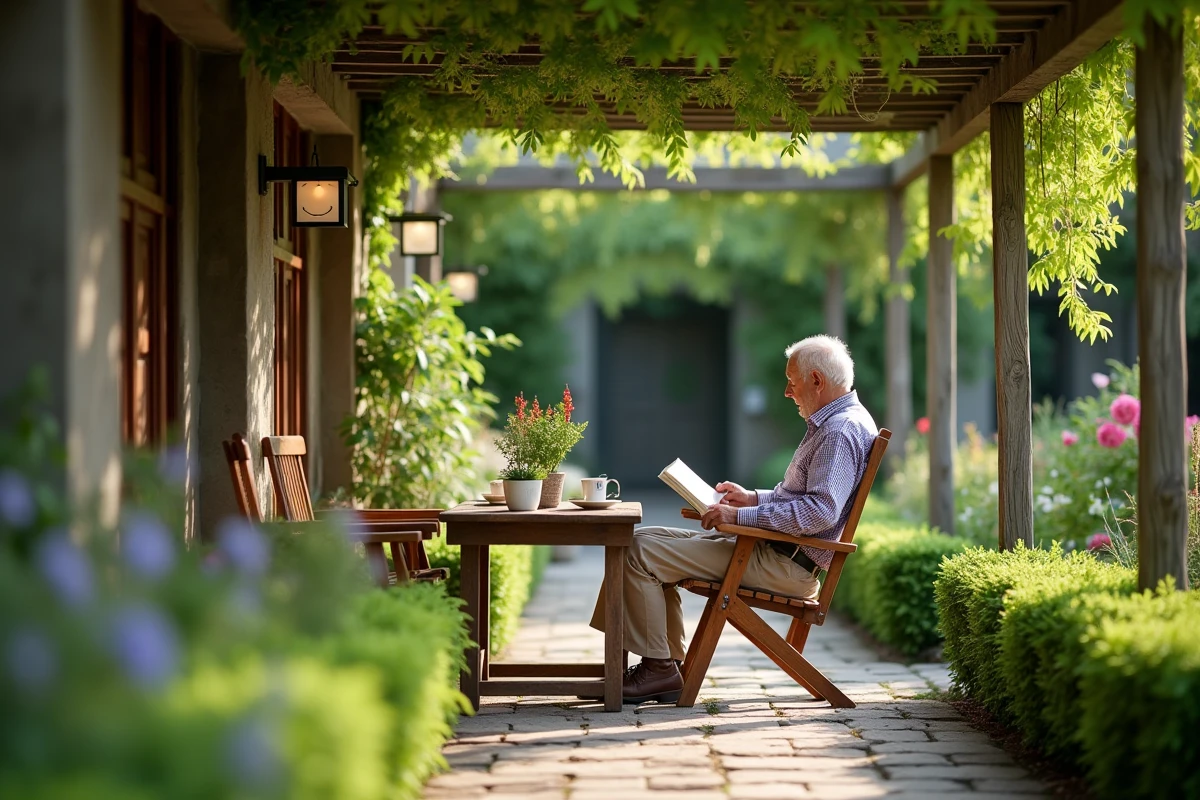
In small spaces, nothing is left to chance. Every centimeter used must meet a double requirement: utility and style. Layout solutions designed for small areas prioritize verticality: green walls, trellises, or modular supports offer more space for planting without encroaching on the living area. Climbing plants structure the space, create natural separations, and enhance every nook.
Narrow gardens or backyards gain character through clever furniture: nesting tables, storage benches, folding seats multiply uses without overwhelming the space. A path of stepping stones or mineral slabs directs the gaze, guides circulation, and lightens the whole.
Here are three tips to optimize each zone:
- Place pots of different sizes to create rhythm and depth.
- Create a discreet shelter for tools or bicycles, backed against a hedge or hidden behind a fence.
- Use light colors for walls and fences to maximize brightness.
Even on a small surface, it is possible to delineate several atmospheres: a relaxation corner under a light pergola, a raised vegetable garden, a mini-trained orchard. Everything depends on the combination of decorative elements that structure without overwhelming. Adapting solutions for designing an urban garden is primarily about observing, rethinking the space, and cultivating difference. Uniqueness is not measured in square meters, but in ideas sown and precise gestures. It is up to each person to grow their own exceptional land.